

How To Draw A Point In R Ggplot
R How to Plot Data with Conviction Intervals Using ggplot2 Bundle (Example Code)
In this article you'll learn how to plot a information frame with confidence intervals using the ggplot2 package in R programming.
Setting up the Example
set.seed( 238764333 ) # Construct some random information df_CI <- data.frame(x_values = ane : 25 , y_values = runif( 25 , 1 , two ) , lower_CI = runif( 25 , 0 , 1 ) , upper_CI = runif( 25 , 2 , 3 ) ) df_CI # Show instance information in RStudio console # x_values y_values lower_CI upper_CI # 1 1 1.497724 0.18452314 2.086016 # two 2 one.205241 0.44810720 2.172153 # 3 3 1.677150 0.01113677 2.755956 # 4 iv 1.944724 0.66876006 ii.968620 # 5 5 1.210716 0.41809743 ii.703515 # six vi 1.576586 0.13839030 2.716492 # 7 seven 1.434327 0.42954432 2.541105 # viii 8 one.329666 0.56201672 2.740719 # nine 9 1.624894 0.94046553 two.725235 # 10 ten 1.999992 0.75788611 2.872872 # 11 11 1.076288 0.02126278 2.089156 # 12 12 1.698039 0.66717068 2.301000 # 13 13 1.149957 0.35207286 2.625906 # 14 xiv 1.212798 0.94494239 2.744084 # xv 15 1.547397 0.61135352 2.491838 # 16 xvi one.387348 0.79431157 2.087978 # 17 17 1.279603 0.57946594 ii.557548 # eighteen 18 1.534598 0.27164055 ii.717535 # 19 nineteen 1.686022 0.66113979 ii.664230 # 20 20 1.677092 0.70238721 two.373479 # 21 21 ane.942224 0.06481388 2.217472 # 22 22 i.629116 0.14106900 ii.056812 # 23 23 1.413006 0.27121570 two.709895 # 24 24 1.701890 0.77305589 2.447095 # 25 25 i.019012 0.29547495 2.238710
prepare.seed(238764333) # Construct some random information df_CI <- data.frame(x_values = 1:25, y_values = runif(25, 1, 2), lower_CI = runif(25, 0, 1), upper_CI = runif(25, 2, three)) df_CI # Show example data in RStudio console # x_values y_values lower_CI upper_CI # one i one.497724 0.18452314 ii.086016 # ii 2 ane.205241 0.44810720 2.172153 # 3 3 1.677150 0.01113677 two.755956 # 4 4 1.944724 0.66876006 2.968620 # 5 5 i.210716 0.41809743 2.703515 # half dozen 6 i.576586 0.13839030 ii.716492 # 7 7 one.434327 0.42954432 ii.541105 # eight 8 1.329666 0.56201672 2.740719 # 9 nine i.624894 0.94046553 2.725235 # x 10 i.999992 0.75788611 2.872872 # 11 11 1.076288 0.02126278 two.089156 # 12 12 1.698039 0.66717068 2.301000 # 13 thirteen i.149957 0.35207286 2.625906 # 14 xiv one.212798 0.94494239 2.744084 # 15 fifteen ane.547397 0.61135352 ii.491838 # 16 xvi 1.387348 0.79431157 ii.087978 # 17 17 1.279603 0.57946594 2.557548 # 18 eighteen 1.534598 0.27164055 2.717535 # 19 19 1.686022 0.66113979 2.664230 # 20 20 1.677092 0.70238721 two.373479 # 21 21 1.942224 0.06481388 2.217472 # 22 22 1.629116 0.14106900 2.056812 # 23 23 i.413006 0.27121570 two.709895 # 24 24 one.701890 0.77305589 2.447095 # 25 25 1.019012 0.29547495 2.238710
install.packages( "ggplot2" ) # Install & load ggplot2 packet library( "ggplot2" )
install.packages("ggplot2") # Install & load ggplot2 packet library("ggplot2")
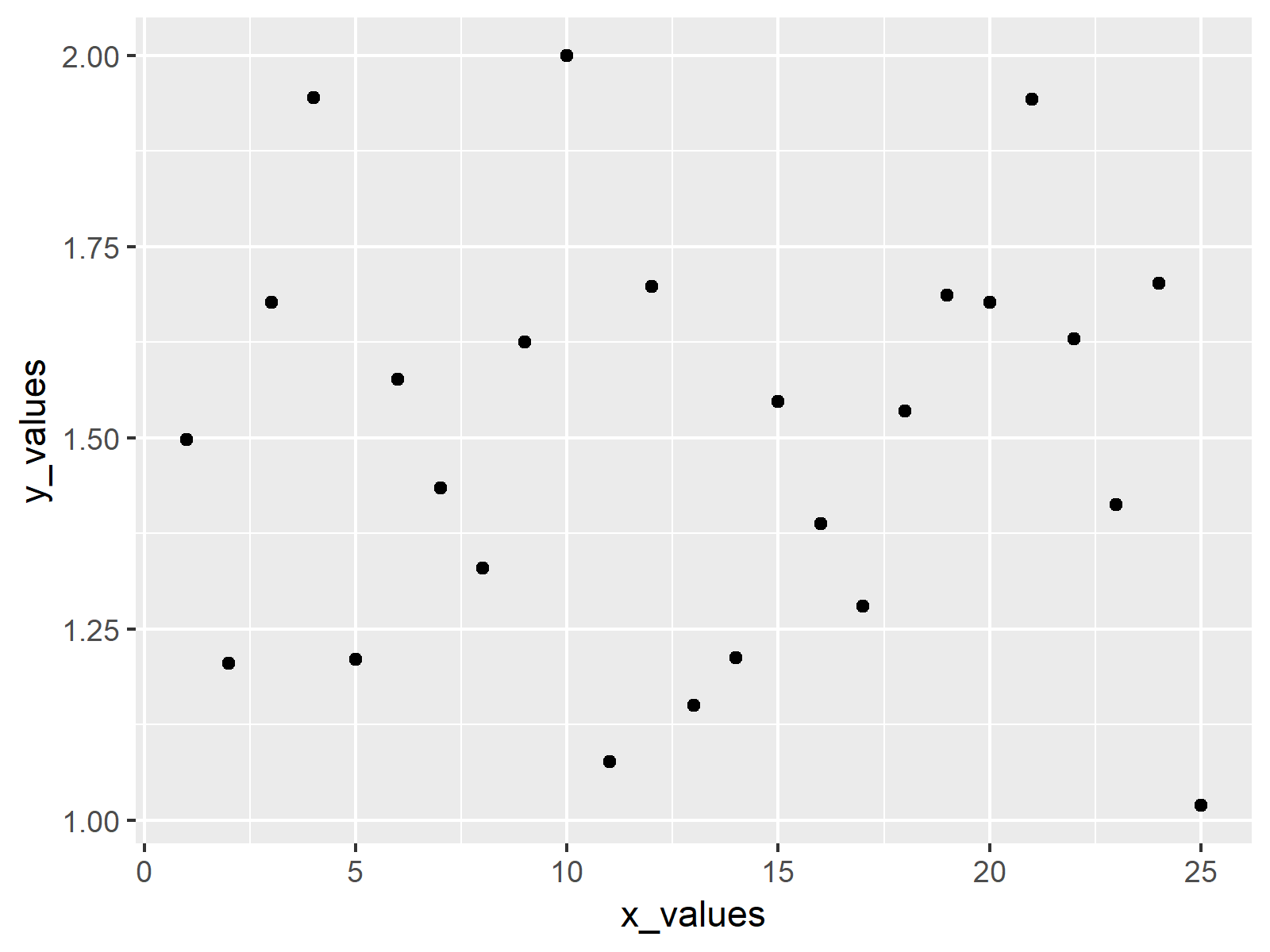
my_ggplot <- ggplot(df_CI, # Create default ggplot2 scatterplot aes(x = x_values, y = y_values) ) + geom_point( ) my_ggplot # Draw plot in RStudio
my_ggplot <- ggplot(df_CI, # Create default ggplot2 scatterplot aes(x = x_values, y = y_values)) + geom_point() my_ggplot # Describe plot in RStudio
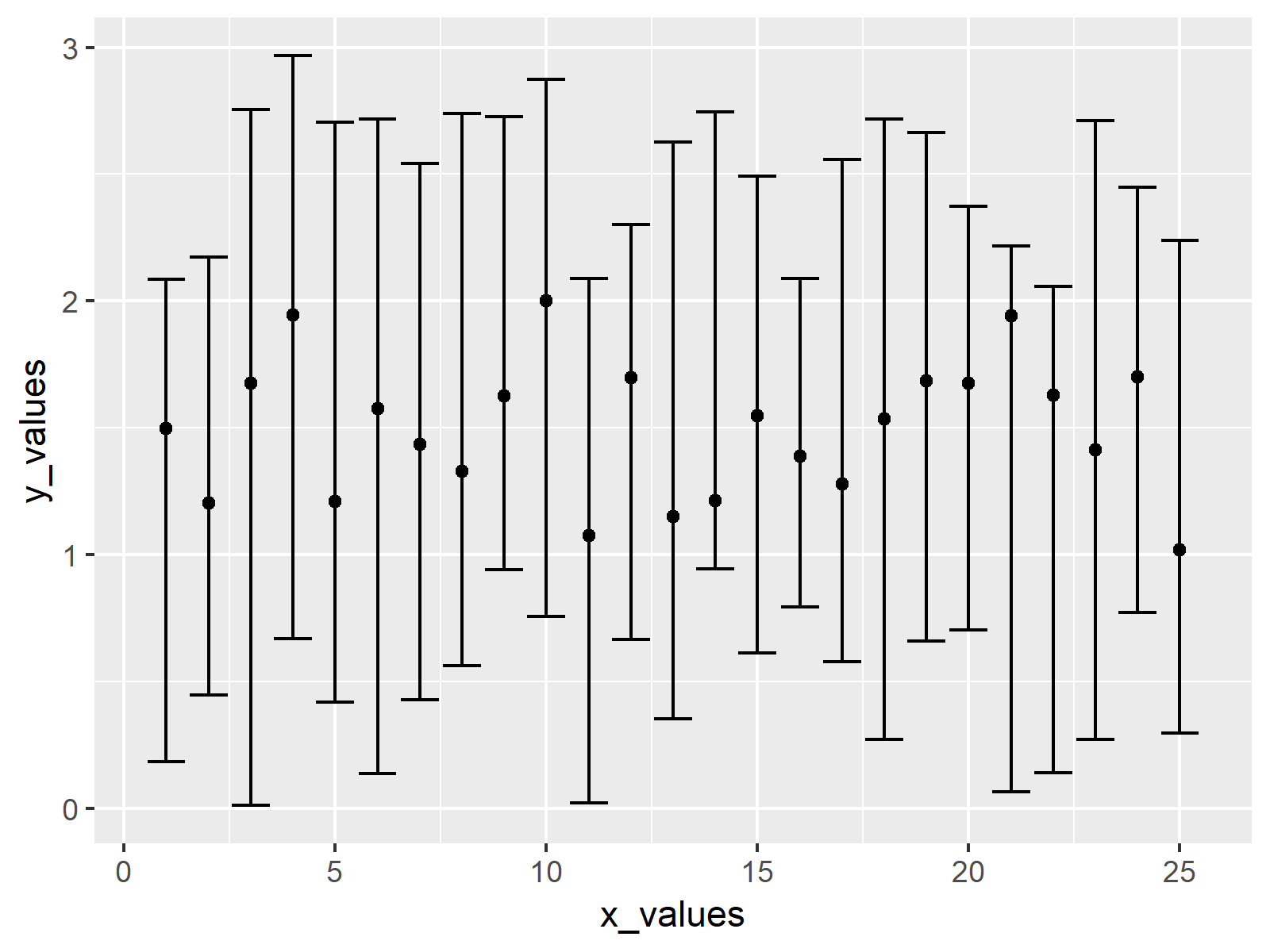
Case: Create ggplot2 Plot with Lower & Upper Conviction Intervals
my_ggplot + # Adding conviction intervals to ggplot2 plot geom_errorbar(aes(ymin = lower_CI, ymax = upper_CI) )
my_ggplot + # Adding conviction intervals to ggplot2 plot geom_errorbar(aes(ymin = lower_CI, ymax = upper_CI))
Further Resources & Related Articles
Please find some additional R tutorials on topics such as variables, graphics in R, and ggplot2 below.
- Draw Line Segment to Plot in Base R
- How to Draw a ggplot2 Plot from 2 Different Data Sources
- How to Draw All Variables of a Data Frame in a ggplot2 Plot


How To Draw A Point In R Ggplot,
Source: https://data-hacks.com/r-plot-data-confidence-intervals-using-ggplot2-package
Posted by: randolphfrund1996.blogspot.com
0 Response to "How To Draw A Point In R Ggplot"
Post a Comment